
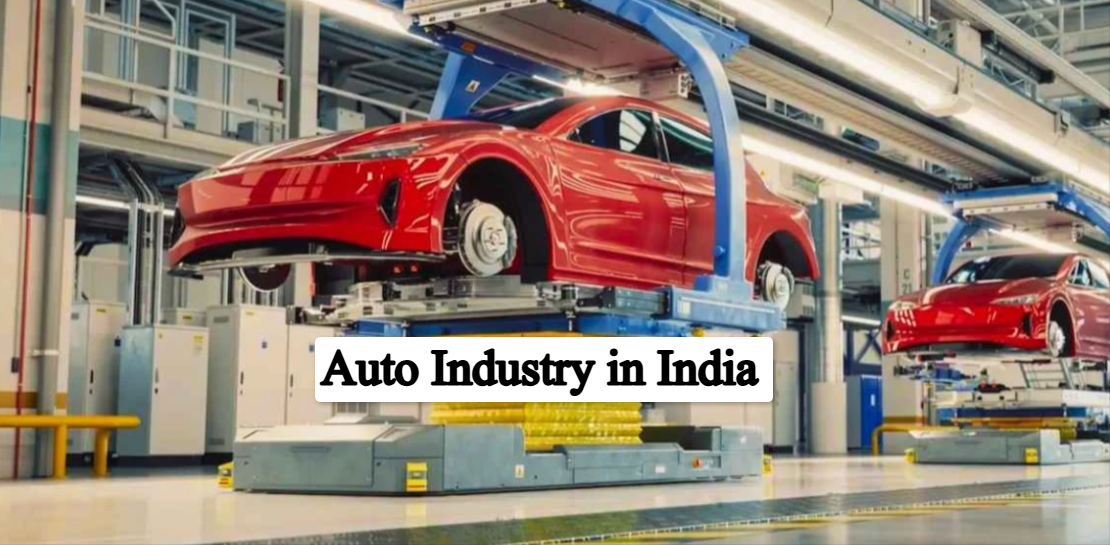
The Auto Industry in India by 2025 will be a vibrant blend of technological innovation along with market expansion and sustainable growth. Being one of the biggest auto markets worldwide the auto industry in India is no longer an industrial hub, it’s transformed into an innovation hub as well as global competition. With growing consumer expectations and the support of government policy and a shift to electric mobility and electric vehicles, the Indian automobile industry by 2025 is in the leading edge of a new age of smart, connected and more sustainable transport.
Overview: A Major Economic Powerhouse
In 2025 by 2025, the Indian automobile industry is estimated at 130-140 billion dollars which contributes almost 7 percent of the GDP of the country and employing nearly 37 million persons in both ways. India is still the third largest market for automobiles in the world and is ahead of Japan by 2023 and following China as well as the United States.
The market covers a broad range of vehicles, from two-wheelers as well as passenger cars as well as commercial automobiles to hybrid and electric vehicles. With more than 25 million cars sold each year the market in the US is growing due to rapid urbanization, growth in infrastructure and a growing populace.
Market Segmentation and Growth Trends
The Indian auto market by 2025 will be diverse and well-organized across various product categories:
- Two-Wheelers (70 percent of sale): India remains the biggest market for two-wheelers in the world with a strong demand from both rural and urban regions. Electric bikes and scooters are becoming more popular due to their low cost and operating cost.
- passenger vehicles (15 percent in sales): The segment has seen massive growth with the most notable being compact cars and SUVs which are now dominating more than 55 percent of the market.
- Commercial vehicles (10 percent of total sales): Growth is being driven by e-commerce, logistics, as well as infrastructure improvement under the PM Gati Shakti Mission.
- Electronic Vehicles (EVs): Rapidly becoming the fastest-growing industry segment, sales of electric vehicles are expected to surpass 1.5 million vehicles by FY2024-25 and three-wheelers and two-wheelers leading the charge.
The combination of growing disposable incomes as well as government-led efforts to electrify the country has created India among the most thrilling auto markets worldwide.
Policy Support and Government Initiatives
Government initiatives have played a key role in shaping India’s automotive sector in 2025. The most influential initiatives include:
- FAME II (Faster adoption as well as Manufacturing of Electric Vehicles): Provides subsidies and incentives to EV buyers and their manufacturers to help accelerate the adoption.
- Production-Linked Incentive (PLI) Scheme for Automobiles and Advanced Chemistry Cells: With a budget of more than five lakh crore this scheme promotes the manufacturing in India of batteries, electric vehicles and other advanced auto parts.
- Scrappage Regulation (2021): Encourages the replacement of vehicles that are old and increases demand for brand modern, efficient and environmentally friendly models.
- Create for India and Atmanirbhar Bharati Initiatives: Support localization of production, while reducing the dependence of auto parts on imports.
- National Electric Mobility Mission Plan (NEMMP): It sets ambitious targets for electric vehicle adoption, the development of infrastructure and incentives for investment.
This policy has not just led to innovation, but they have also positioned India as a desirable place for automakers from around the world as well as component makers.
Electric Mobility Revolution
2025 is a crucial year for the country’s electric mobility transformation. With rising fuel costs as well as environmental awareness and incentives for policy the EV industry is expanding across all categories:
- Two-Wheeler Electric Vehicles: Brands like Ola Electric, Ather Energy, Bajaj Chetak, and TVS iQube dominate the market.
- Passenger Electric Vehicles: Automakers such as Tata Motors, MG, Hyundai, and Mahindra are leading with an electric vehicle that is accessible to all.
- Commercial electric vehicles: The rise of electric buses, three-wheelers along with delivery trucks is revolutionizing urban logistics.
The government’s efforts to create the development of charging infrastructure that includes more than 10,000 charging stations in 2025 will ensure greater adoption. Electric vehicle sales have risen by an average annual growth rate (CAGR) of more than 70 percent over the past three years.
Additionally, the growth of hubs for manufacturing batteries as well as recyclers’ ecosystems helps India to become self-reliant within this EV price chain.
Innovation, Technology, and Sustainability
The auto industry by 2025 will be driven by technological integration as well as sustainability goals.
- Connected and smart vehicles: IoT-enabled dashboards, AI-assisted driving, as well as vehicle telematics are enhancing users’ experience and safety.
- Sustainable Manufacturing companies are investing money in carbon neutral production facilities and manufacturing facilities that use renewable energy sources.
- Alternative fuels: CNG, ethanol-blended gasoline, and hydrogen fuel cell technology are being developed along with electric vehicles to expand India’s alternative to clean energy for mobility.
- The digitalization of retail Car sales online, AI-based financing, as well as after-sales digital service are changing customer journeys.
Automobile manufacturers aren’t selling cars- they’re also selling experiences powered by intelligence, efficiency and sustainability.
Export Growth and Global Presence
In 2025, the auto industry of India isn’t just focused on domestic markets It has also emerged as an important exporter of cars as well as components. Exports of automobiles are estimated at 25 to 27 billion dollars annually with the most important destinations such as Africa, Latin America as well as in the Middle East, and Southeast Asia.
Exports of passenger cars and two-wheelers that are which are led by Maruti Suzuki, Hyundai, TVS, and Bajaj Auto continue to expand quickly. In addition the auto component sector that is worth over 60 billion dollars is expanding its global presence, helped by modern manufacturing techniques and robust R&D capabilities.
Challenges and Roadblocks
Although the outlook is positive but the industry faces a variety of issues:
- Supply Chain Disruptions in Supply Chain The shortage of semiconductors as well as the raw material inflation have affected the cost of production.
- Infrastructure Gaps EV charging infrastructure as well as roads in rural areas require faster expansion.
- Environmental Regulations: More stringent BS-VI norms as well as emission standards raise compliance costs.
- Technology Gaps and Competition: Intense global competition demands continuous R&D investment.
To overcome these challenges is essential for maintaining the momentum of growth and to meet the sustainability goals.
Future Outlook: The Road to 2030
In the future looking ahead, looking ahead, the Indian auto industry is set to see a transformative growth. Analysts predict that the market will be 200 billion dollars by 2030 and due to automation, electrification as well as digital and digital-based ecosystems.
By 2030:
- Electric vehicles could be responsible for 30 to 35% of all automobile sales.
- India could be an world-class centre for small-car and electric vehicle exports.
- The auto component industry could reach $100 billion dollars and is integrating well with supply chains across the globe.
Conclusion: Accelerating Toward a Smarter Tomorrow
The automobile industry in India by 2025 represents the country’s greater technological and industrial advancement. It is the perfect combination of sustainability, innovation, and resiliency. As India grows into a global powerhouse in mobility and the industry’s concentration on green technology, digital transformation and excellence in exports will be the defining factors of its path.
From electric scooters that travel on Indian streets to the connected vehicles powered by AI The technology that will drive mobility for India is smart, electric and inclusive- driving more than just cars but also the nation’s goal towards a cleaner, more intelligent and more self-reliant future.