
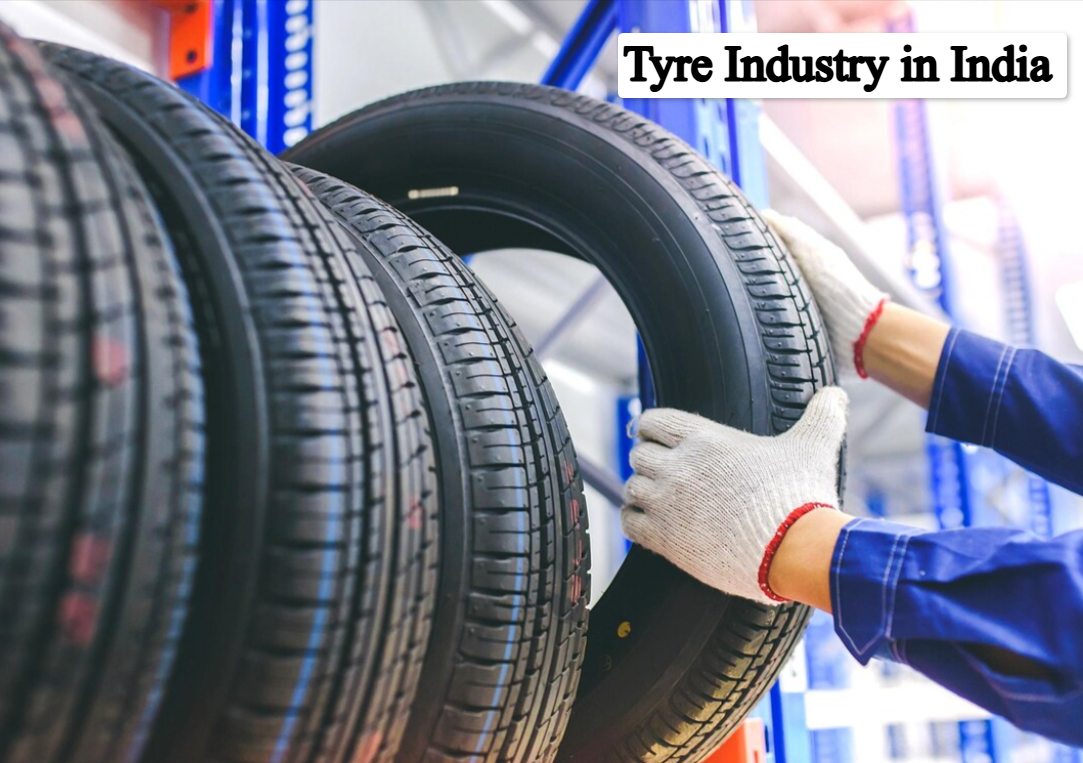
The industry of tyres in India by 2025 is an outstanding illustration of the industrial advancement as well as resilience and technological development. Being one of the biggest auto component industries in the world and plays a crucial part in sustaining India’s transportation as well as logistics and manufacturing ecosystems. Rapid advancements in the field of electric mobility, expansion of infrastructure as well as global trade as well, the Indian tyre industry has evolved from a market that was primarily domestic to an internationally competitive manufacturing engine.
Overview: A Robust and Expanding Market
In 2025, the Indian industry of tyres has grown to an market worth between Rs85,000 and 90,000 crore (USD 10 to 11 billion) market, reflecting an increase in both the domestic and export sectors. The industry is responsible for almost three percent of India’s GDP from manufacturing and employs nearly 1.5 million individuals both indirectly and directly.
India currently ranks in the top five tyre producers worldwide due to the an increasing demand in the domestic automotive industry as well as a growing international presence. Tyres are used for a variety of segments like commercial, passenger vehicles two-wheelers, tractors and off-road (OTR) vehicles.
The success of the industry is connected to India’s growth in the automobile infrastructure development, as well as the market for replacement tyres, which is expected to be responsible for more than 60% of all demand for tyres by 2025.
Industry Structure and Key Players
The Indian industry of tyres is well organized, with only a handful of big companies governing the production process and advancing. The leading players are MRF Ltd., Apollo Tyres, JK Tyre & Industries, CEAT Ltd., Balkrishna Industries (BKT), and TVS Srichakra. They collectively control more than 80 percent of total market.
Every industry segment is driven by a unique growth factor:
- Passenger Cars and SUV Tyres This demand comes from the increase in vehicle ownership and a preference for premium tyres.
- Commercial Tyres Radial tyres that are fuel-efficient are growing in popularity due to logistics and online commerce expansion.
- Two-Wheeler Tyres Continue to be a popular category and are particularly popular for rural India.
- Agricultural as well as OTR Tyres Mechanization, global trade and exports are the main drivers.
The companies are investing innovative tyres, radiation and sustainable development to stay competitive in both the domestic as well as global markets.
Policy and Government Support
The government’s policies have played a key role in increasing the tyre manufacturing capacity and competitiveness of the industry:
- Atmanirbhar Bharati (Self-Reliant India): Promoting domestic production of tyres as well as raw material.
- Production-Linked Incentive (PLI) Scheme: Encourages investment in large-scale production of tyres and other related components.
- National Automotive Mission Plan 2026: Supports R&D for eco-friendly and high-performance tyres.
- Stops Waste Tyre Imports: Protects local manufacturers and encourages recycling.
- Infrastructure and Road Development Programs: The expansion of roads, logistics parks and rural roads in the PM Gati Shakti initiative has dramatically increased the the demand for commercial vehicle tires.
These frameworks of support have allowed the industry to increase production, modernize facilities and boost the competitiveness of exports.
Technology and Innovation: The Road Ahead
The tyre business in 2025 will undergo a dramatic technological change. Manufacturers are focusing on research and development, automation along with digitalization to improve the performance and sustainability of their products.
- Intelligent Tyres Sensors that measure temperature, pressure and tread wear are improving the safety of vehicles and their efficiency.
- Radialisation More than 95 percent of tyres for passenger cars along with 75percent of truck and bus tires have been made radial, which means they have better durability and efficiency in fuel consumption.
- sustainable materials: A rise in the use of silica as well as bio-based rubber and carbon black that has been recycled can reduce environmental impacts.
- electric Vehicle (EV) Tyres As electric vehicles gain popularity, vehicles Tyres are being modified to accommodate more torque, faster acceleration and noise reduction demands.
- Automation as well as Robotics: Advanced manufacturing methods and AI-driven quality control can improve productivity and increase reliability.
These new technologies can help Indian companies to be more in line with global standards and appeal to eco conscious customers.
Export Growth and Global Footprint
The export sector that is tyre business has experienced a dramatic growth rate during the past few years. In FY 2024-25, the exports of tyres from India are expected to have surpassed $3 billion which is an increase by 2.2 billion from 2.2 billion by 2021-22.
Indian tyres are currently being delivered to more than 150 nations which is a result of a strong demand coming from Europe, Africa, Latin America, and the Middle East. Companies like Apollo Tyres and BKT have set up global manufacturing facilities as well as R&D centers to meet the needs of international markets.
The high-end, competitive cost and dependability of Indian tires have created a highly appealing alternative for Chinese or Southeast Asian products.
Raw Materials and Supply Chain Dynamics
The rubber industry — both natural and synthetic, is the primary input in the manufacturing of tyres. India is the third largest producer of natural rubber is a major advantage. However, the fluctuation in the global price of rubber and dependence on synthetic rubber imported from elsewhere are still influencing the cost structure.
Manufacturers are more and more focusing on domestic sources, rubber plantations in the Northeast and sustainable procurement methods to ensure supply stability and limit environmental impacts.
The logistics infrastructure has greatly improved, with the integration of supply chains as well as automated warehouses that have increased efficiency of distribution across the country.
Challenges and Industry Headwinds
Despite its rapid growth the tyre industry is facing numerous problems:
- high input costs The volatility of the prices of raw materials, particularly crude oil derivatives and rubber impacts margins.
- Competitive Imports: Imports at a low cost originate from China along with Southeast Asia continue to pressure local players.
- environmental compliance: Recycle and dispose of tyres with used treads are important regulatory issues.
- Technology gap in the MSME segment: Smaller firms have a difficult time implementing the latest processes and quality standards.
Addressing these issues via policies that are consistent, R&D investment, and industry collaboration is the key for sustaining the momentum.
Future Outlook: Rolling Toward a Sustainable Future
In 2025 by 2025, by 2025, the Indian tire industry will be moving towards sustainability as well as digital transformation and leadership in the global arena. As the EV revolution and eco-friendly manufacturing practices gaining prominence the tyre industry is making sure their strategies are aligned to global trends in the automotive industry.
The next stage that will drive growth would be driven
- Expansion of exports to new regions.
- The development of advanced tyres for electric vehicles or autonomous vehicle.
- Intensifying circular economy and recycling initiatives.
- Intensifying domestic production of synthetic rubber as well as raw materials.
Analysts estimate the possibility that, by 2030 the Indian tyre industry could be able to reach a in the region of Rs1.3 lakh crore (USD 15-16 billion), firmly establishing India as a world-class manufacturing center for tyres.
Conclusion: India’s Tyre Industry on the Fast Lane
The tyre industry of India by 2025 is a reflection of the nation’s larger industrial shift that has moved from production driven by cost to technologically driven innovation. With a strong domestic demand and a strong policy support and a growing competitiveness in exports, Indian tyre manufacturers are heading towards leading the global market.
With sustainability, innovation along with quality, as driving wheels The industry isn’t only driving cars but driving India’s path towards self-reliance in the industrial sector in green mobility..